
If you've ever looked at your old, clunky bathtub and pictured a sleek, spacious shower in its place, you're in good company. A tub-to-shower conversion is one of the most popular bathroom upgrades out there. It’s a project where you rip out the old tub and install a walk-in shower, which can instantly update the look of your space while making it far more practical and safe.
Why Ditch the Tub for a Shower?
The choice to swap a rarely-used bathtub for a modern shower usually comes down to a mix of lifestyle changes, a desire for a fresh look, and a bit of future-proofing. This isn't just about changing a fixture; it's about making your bathroom work better for you and your daily routine. It's an upgrade that can completely change how the room feels and functions.
This isn't a niche trend, either. The North American bath remodeling market was worth a massive $67.8 billion in 2023 and is expected to climb to $88.4 billion by 2032. That number tells you just how many people are rethinking their bathrooms. You can explore more data on the growing bathroom remodeling market to get a sense of the scale.
More Space, Modern Style
The most immediate change you'll notice is how much bigger the room feels. A traditional tub with a shower curtain really closes off a space, making it feel dark and cramped. A walk-in shower, especially one with a simple glass door, opens everything up with clean lines and an illusion of depth.
This project is your chance to bring your bathroom's style into the present day. You're getting rid of a standard-issue fixture and creating a focal point that feels truly contemporary. The main benefits here are:
- An Open, Airy Vibe: Tearing out the high walls of a tub makes a small bathroom feel significantly larger and brighter.
- A Fresh Look: It’s the perfect excuse to bring in modern materials like large-format tiles, stylish new fixtures, or frameless glass.
- Endless Customization: You can design your shower from the ground up with cool features like built-in storage niches, a comfortable bench, or a unique tile pattern that a standard tub just can't offer.
A Safer, More Accessible Bathroom
For a lot of homeowners, the decision is all about safety. Having to step over a high tub wall every day is not just an annoyance; it's a genuine fall risk, particularly for older adults or anyone with limited mobility. A tub-to-shower conversion is a direct solution.
A low-curb or zero-threshold shower entry removes one of the biggest tripping hazards in the home. It's a smart, forward-thinking move that supports aging in place, making it possible to stay in your home safely and comfortably for years to come.
And focusing on accessibility doesn't mean you have to compromise on style. These days, you can find beautiful grab bars in finishes like matte black or brushed gold that look more like high-end accessories than safety equipment. Benches can be built right into the tile work for a seamless look. The end result is a bathroom that’s as sophisticated as it is safe.
Exploring Your Shower Conversion Options
So, you've decided to ditch that old tub for a new shower. That’s the first big step! Now comes the fun part: figuring out what kind of shower is right for your home. This isn't a one-size-fits-all decision. The best path for you really boils down to your budget, your timeline, and the look you’re going for.
Think of it like getting a new suit. You could grab one off the rack, get a custom-tailored one, or even opt for something completely bespoke. Each gets the job done, but the experience, cost, and final result are worlds apart. Your shower options are pretty similar.
This little flowchart helps visualize that first fork in the road. Is that old tub just not cutting it anymore?
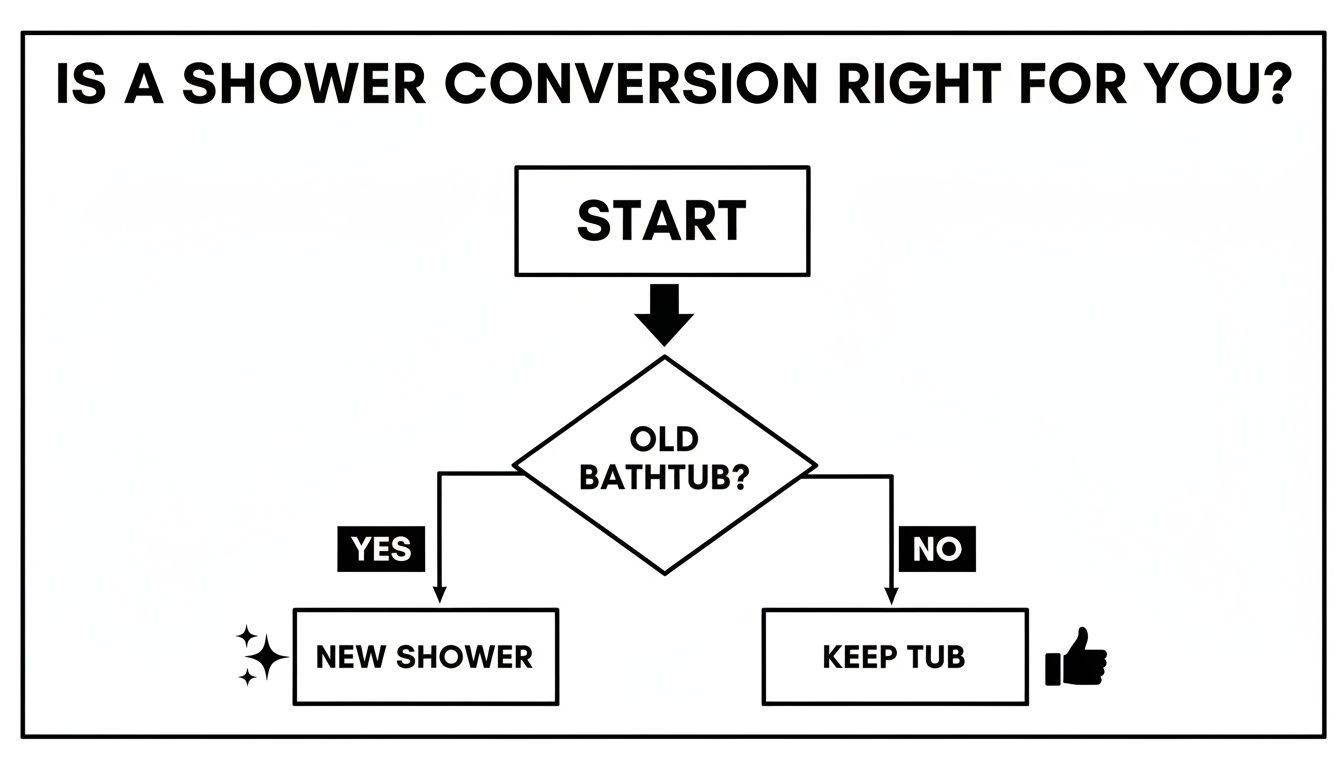
Ultimately, the goal is to swap out that old tub space for something that works better for you and looks a whole lot sharper. Let's break down the three main ways to get there.
The Prefabricated Shower Kit: Quick and Easy
A prefabricated shower kit is the "all-in-one" solution of the bathroom world. It's a complete package that includes a shower pan and interlocking wall panels, usually made from durable materials like acrylic or fiberglass. If speed and budget are your top priorities, this is often the way to go.
The biggest selling point here is how fast it comes together. A good pro can often get a prefab kit installed in just a couple of days since there’s no tile setting or grout work involved. Plus, the seamless, non-porous surfaces are a breeze to clean—no more scrubbing grout lines!
The trade-off, of course, is customization. You’re working with the sizes, colors, and styles the manufacturer offers. While the designs have gotten much better over the years, they might not deliver that unique, high-end look some homeowners are after.
The Custom Tiled Shower: Your Vision, Your Design
If a prefab kit is the off-the-rack option, a custom tiled shower is the perfectly tailored one. This route gives you complete creative freedom. You choose literally everything: the exact size and shape of the shower, the tile material, the layout pattern, and where you want to put handy features like benches and shampoo niches.
This is how you get a shower that feels like it was truly made for your bathroom. From timeless subway tile to elegant natural stone, the design possibilities are virtually endless. This level of detail doesn't just look great; it can also add significant value to your home.
A custom tiled shower is a real investment in your home's style and day-to-day function. It costs more and takes longer to build, but the payoff is a durable, personalized oasis that often becomes the centerpiece of the bathroom.
The main considerations here are time and money. Tiling is a skilled craft that demands expert waterproofing and precise installation, making it a more expensive and drawn-out project than putting in a prefab unit.
The Curb-less (or Barrier-Free) Shower: The Peak of Style and Safety
The curb-less shower, also called a barrier-free or zero-threshold shower, is where modern design and accessibility meet. Just as the name implies, the bathroom floor flows right into the shower space without any curb or lip to step over.
This is the gold standard for aging-in-place design because it eliminates a common trip hazard and makes it easy for a wheelchair to roll right in. But beyond the practical safety benefits, curb-less showers create an open, spa-like atmosphere that can make the whole bathroom feel bigger and more luxurious.
This is, however, the most complex and expensive conversion of the bunch. To make it work, the shower floor has to be recessed into your home’s floor joists to create the proper slope for drainage. It’s a major construction project involving structural and plumbing modifications, so it’s definitely a job for a seasoned professional. While it isn’t the right fit for every home or budget, its blend of safety and high-end style is truly unmatched.
Comparing Tub To Shower Conversion Types
To help you weigh your options, here’s a quick side-by-side comparison of the three main conversion types. Think about what matters most to you—cost, speed, or complete design freedom.
| Feature | Prefabricated Kit | Custom Tiled Shower | Curb-less Shower |
|---|---|---|---|
| Typical Cost | Low to Moderate | Moderate to High | High to Very High |
| Installation Time | 1-3 days | 5-10+ days | 2+ weeks |
| Customization | Low (limited sizes/colors) | High (endless options) | Very High (fully integrated) |
| Maintenance | Very Low (no grout) | Moderate (grout sealing) | Moderate (grout sealing) |
| Best For | Budget, speed, rental properties | Personalization, home value | Accessibility, luxury design |
Each path leads to a fantastic new shower, but knowing the pros and cons upfront will ensure you choose the one that aligns perfectly with your goals for the project.
Budgeting for Your Tub-to-Shower Conversion
Let's talk money. It's often the biggest question mark in any remodel, and a tub-to-shower conversion is no different. The final price can swing wildly, from around $3,000 for a simple, all-in-one prefabricated kit to well over $15,000 for a custom-tiled, curb-less shower with all the bells and whistles. Knowing what drives those numbers is the first step to building a budget that actually works for you.
Think of it like buying a car. You have the base model price, but then you start adding features—leather seats, a sunroof, a better sound system. Each choice affects the final sticker price. A basic, functional shower is your starting point, but luxury tile, high-end fixtures, and complex plumbing changes are the upgrades that will shape your total investment.
Key Factors That Influence Your Budget
A few key decisions will have the biggest impact on your total spending. Once you understand them, you can figure out where to splurge and where you might be able to save a few bucks.
- Type of Shower: As we've touched on, a prefabricated kit is your most economical route. A custom-tiled shower lands in the mid-to-high range, while a true curb-less design is the premium option because of the extra structural and plumbing work it demands.
- Material Choices: This is a big one. The price gap between standard ceramic tile and imported natural stone can easily run into the thousands. The same goes for fixtures—a basic showerhead is a world away from a multi-jet, thermostatic shower system.
- Plumbing Complexity: Is your contractor just swapping out the old fixtures for new ones? Or are they tearing into the walls and floor to move the drain and supply lines? Rerouting plumbing is a labor-intensive job that will definitely add to the bottom line.
- Labor Rates: Where you live matters. A seasoned pro in a high-cost-of-living area like California is going to charge more than a general handyman in a more affordable region. Experience and reputation play a huge role here, too.
Understanding Market Context
It's also interesting to see how this project fits into the broader home improvement landscape. While the global bathtub market was valued at a massive USD 10.72 billion in 2023, the numbers also show a clear shift in what homeowners want, especially here in North America. This region holds the largest market share, but the fast-growing popularity of modern shower systems tells us that the old tub-centric bathroom is on its way out.
The cost of your conversion is an investment in your home's functionality, safety, and aesthetic appeal. By understanding the cost breakdown, you can allocate your funds to the features that matter most to you, whether that's accessibility, luxury, or a simple, modern update.
Smart Ways to Manage Your Spending
Getting a beautiful new shower doesn’t have to mean draining your savings. With some smart planning, you can make choices that give you a high-end look without the high-end price. For more ideas on managing costs, check out our guide on bathroom remodel tips to help you upgrade without breaking the bank.
Here are a few proven strategies to keep your budget on track:
- Keep the Plumbing Layout: This is the single most effective way to control costs. If you can leave your shower drain and water supply lines right where they are, you'll save a significant amount on labor.
- Choose Cost-Effective Materials: You can absolutely get a premium look for less. For example, modern porcelain tiles do an incredible job of mimicking expensive marble or natural stone for a fraction of the cost.
- Bundle Your Purchases: Whenever you can, try to buy your shower pan, wall surrounds, and fixtures from the same supplier. Many companies offer package deals or discounts for buying everything together.
- Prioritize Your "Wants" vs. "Needs": Get honest about what's a must-have and what's a nice-to-have. If an integrated bench is non-negotiable for safety, make it a priority in your budget. If that fancy rainfall showerhead is just a "want," it might be the first thing to cut if costs start to creep up.
Choosing The Right Materials And Fixtures
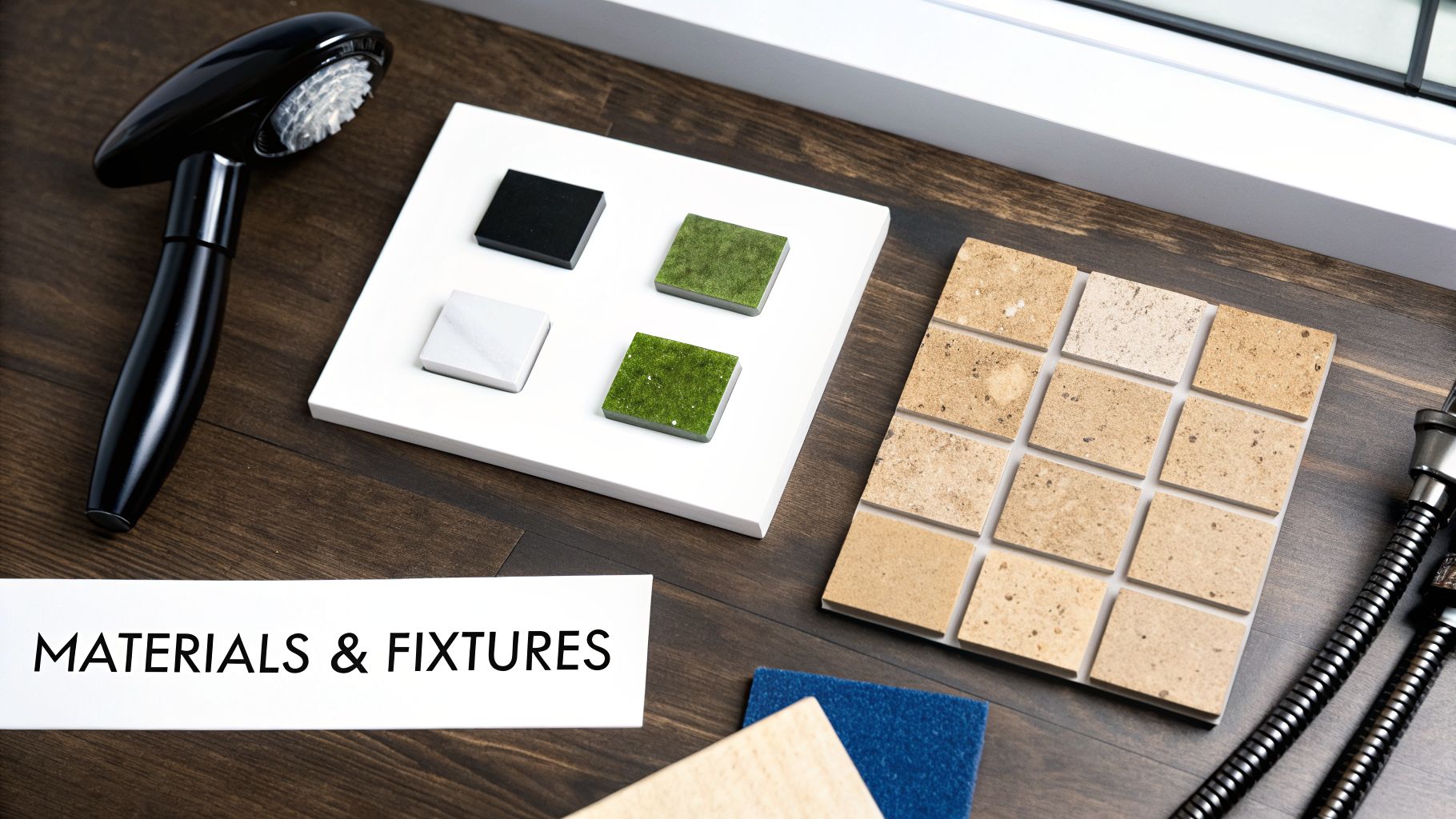
Okay, you’ve got the bones of your project planned out. Now for the fun part—choosing the materials and fixtures that will bring your new shower to life. This is where your personal style really gets to shine.
The choices you make here will define everything from the daily vibe of your bathroom to how much time you spend cleaning it on weekends. It's a balancing act between the look you want, the durability you need, and the budget you have.
Start with the Shower Walls
Think of the shower walls as the main backdrop. They set the tone for the entire room, so it’s a big decision.
- Acrylic and Fiberglass Panels: If "low-maintenance" is your mantra, these are for you. They create a seamless, grout-free surface that’s a breeze to wipe down. No scrubbing grout lines on a Saturday morning.
- Porcelain and Ceramic Tile: For total creative freedom, nothing beats tile. You can go for a timeless subway tile pattern, a bold mosaic, or something totally unique. The design possibilities are endless, but just remember that those grout lines will need regular attention.
- Natural Stone: For pure, organic luxury, materials like marble, granite, or travertine are hard to beat. Every piece is one-of-a-kind. The trade-off? Stone is porous and needs to be sealed regularly to keep it looking pristine and prevent water stains.
Selecting Your Shower Fixtures
Next up is the hardware—the stuff you'll actually touch and use every single day. These fixtures have a massive impact on your daily routine, so it’s worth thinking through how you want your shower to feel.
The showerhead is obviously the star of the show. A standard wall-mounted head gets the job done, but why stop there? A rainfall showerhead delivers a gentle, luxurious stream, while a handheld wand is incredibly practical for rinsing hair, cleaning the shower, or bathing kids and pets. Many people opt for a dual system to get the best of both worlds.
Don't forget the valve hiding behind the wall—it’s just as important. Upgrading to a thermostatic valve is a game-changer. It keeps the water temperature perfectly consistent, meaning no more surprise bursts of icy cold or scalding hot water when someone flushes a toilet.
The right fixtures do more than just deliver water; they elevate the entire shower experience. From maintaining the perfect temperature to providing targeted relief for sore muscles, modern hardware turns a daily chore into a moment of relaxation.
Elevating Function with Smart Add-Ons
The final touches are all about adding convenience and a little bit of luxury. These are the details that take a shower from good to great.
Consider a few of these popular upgrades:
- Built-In Niches: These recessed shelves give you a sleek, clutter-free spot for shampoos and soaps. Say goodbye to rusty shower caddies.
- Integrated Benches: A built-in or fold-down seat is a fantastic addition for comfort and safety. It’s perfect for relaxing under the water or just having a place to prop your leg while shaving.
- Glass Doors: A frameless glass door instantly makes a bathroom feel bigger and brighter, a huge step up from a clingy shower curtain.
Technology is also making its way into the bathroom. The smart shower market is booming, expected to hit $1.49 billion by 2031 in the U.S. alone. These systems let you dial in the perfect temperature, pressure, and even steam settings with a digital controller or your voice. You can explore the latest trends in the smart shower market to see what's possible.
By mixing and matching these elements thoughtfully, your new shower becomes a truly personalized retreat that not only looks incredible but works perfectly for you.
Understanding The Conversion Process Step By Step
Turning a clunky bathtub into a sleek, modern shower might seem like a bit of construction magic, but it’s really a well-defined process. Knowing what happens behind the scenes helps you set realistic expectations for timelines, understand the temporary disruption, and truly appreciate the skill involved.
Think of it as a carefully choreographed performance in several acts. Each phase is critical, building on the last to create the final, beautiful result. A small mistake in an early step, like waterproofing, can cause major headaches down the road, which is why a methodical, professional approach is non-negotiable.
Phase 1: Initial Demolition and Preparation
The first day is always the messiest but also the most satisfying—it’s time to say goodbye to the old tub. Before the first swing of a hammer, your contractors will prep the area to keep dust and debris contained. This usually means laying down protective floor coverings and sealing the bathroom doorway with plastic sheeting.
Then, the demolition begins. The crew will disconnect the plumbing and physically remove the old bathtub and any surrounding materials, like dated tile or a one-piece fiberglass insert. The goal is to strip the space right down to the wall studs and subfloor, creating a clean slate for your new shower.
This demolition phase is also a moment of truth. Once the walls are open, contractors can inspect the existing plumbing, framing, and subfloor. It's the best time to spot any hidden water damage or mold that needs to be fixed before anything new goes in.
This initial teardown typically takes about a day and sets the stage for everything that follows.
Phase 2: Plumbing and Electrical Rough-In
With the area cleared out, the focus shifts to the "bones" of your new shower. During the rough-in phase, plumbers and electricians map out and install all the necessary infrastructure that lives behind the walls. This is where the real transformation of a tub to shower conversion happens.
A plumber will move the drain from the tub's position to the center of the new shower floor. They'll also install the new shower valve at the proper height and run water lines for the showerhead and any other fixtures you've chosen, like a handheld wand or body jets. If you're adding new lighting, a better exhaust fan, or a smart shower controller, an electrician runs the new wiring at this stage.
It’s called a "rough-in" because it's all done before any drywall or backer board goes up. This step is critical and requires a solid understanding of local building codes to ensure everything is safe, functional, and ready for inspection.
Phase 3: Waterproofing and Installation
This is, without a doubt, the most important stage of the entire project. Faulty waterproofing is the number one cause of shower failures, leading to thousands of dollars in hidden damage from leaks and mold. Professionals use a multi-layered system to create a completely sealed, watertight enclosure.
The process usually involves these key steps:
- Installing the Shower Pan: The base of your shower is set in place. It's carefully sloped to guarantee water flows directly to the drain.
- Putting Up Cement Backer Board: Water-resistant backer board is installed on the wall studs, creating a stable and durable surface for your tile or wall panels.
- Applying a Waterproofing Membrane: A liquid-applied or sheet membrane is used to seal every seam, corner, and screw head. This creates a seamless, impenetrable barrier against moisture.
Only after the waterproofing is complete and fully cured can your chosen wall material—whether it's elegant tile or low-maintenance acrylic panels—be installed. Tiling is a particularly meticulous job that can take several days to allow for setting and grouting.
For more deep-dive project management tips, our article on how to plan a bathroom remodel step-by-step is a great resource.
Phase 4: Final Fixtures and Finishing Touches
The finish line is finally in sight! Once the tile grout or panel adhesive has fully cured, the final elements that bring the whole look together are installed. This is the part where your new shower really starts to look like the one you envisioned.
Your contractor will install the showerhead, the control trim, and any other fixtures. The glass door or panel is carefully measured and fitted into place, and any final painting or trim work is completed.
The very last step is a thorough cleaning and a final inspection to make sure every single detail is perfect. Then, it's all yours to enjoy.
To help you keep track of all the moving parts, here’s a simple checklist you can use to follow your project from start to finish. It’s a great way to stay organized and ensure nothing gets missed.
Tub-To-Shower Conversion Project Checklist
| Phase | Task | Status (To Do, In Progress, Complete) |
|---|---|---|
| 1. Planning & Design | Finalize shower layout, style, and dimensions. | |
| Select all materials: tile, wall panels, shower pan, fixtures. | ||
| Choose a contractor and sign the contract. | ||
| Apply for and receive any necessary building permits. | ||
| 2. Demolition | Protect surrounding areas from dust and debris. | |
| Remove the old bathtub and wall surrounds. | ||
| Inspect studs, subfloor, and plumbing for hidden damage. | ||
| Address any necessary repairs (e.g., rot, mold). | ||
| 3. Rough-In | Adjust drain location for the new shower. | |
| Install the new shower valve and water lines. | ||
| Run any new electrical wiring for lights or fans. | ||
| Pass the rough-in inspection with the city/county inspector. | ||
| 4. Waterproofing | Install the new shower pan. | |
| Install cement backer board on walls. | ||
| Apply a waterproof membrane to the pan and walls. | ||
| 5. Installation | Install wall tile or surround panels. | |
| Grout and seal the tile (if applicable). | ||
| Install the flooring in the rest of the bathroom (if part of the project). | ||
| 6. Finishing | Install the shower trim kit, showerhead, and other fixtures. | |
| Install the shower glass door or panel. | ||
| Complete any final painting, trim, or caulking. | ||
| 7. Final Inspection | Conduct a final walkthrough with your contractor. | |
| Complete the final inspection with the city/county inspector. | ||
| Make the final payment to your contractor. |
Using a checklist like this simplifies the entire process, giving you a clear roadmap and peace of mind as your beautiful new shower comes to life.
Navigating Permits And Local Building Codes
Let's be honest, diving into the world of building permits and local codes can feel a little intimidating. It's definitely not as fun as picking out tile, but getting this part right is one of the most important steps in any tub to shower conversion.
Think of building codes less like a rulebook meant to slow you down and more like a safety manual for your home. They exist to make sure every project is structurally sound, safe, and built to last. A permit is simply the green light from your city or county to start the work, kicking off a process of inspections that protect you, your family, and your home’s value.
When Is A Permit Required?
This is one of the first questions homeowners ask. While the specific rules can change from one town to the next, you will almost certainly need a permit for a tub-to-shower conversion because the project involves changing your home's plumbing.
Count on getting a permit if your project involves any of these key tasks:
- Moving or altering plumbing lines: Shifting the drain from a tub’s position to the center of a new shower floor is a major plumbing change that requires a permit.
- Changing electrical wiring: If you're adding recessed lighting in the shower or putting in a new, more powerful exhaust fan, that's electrical work that needs to be up to code.
- Modifying structural elements: This is a big one. For more involved projects like a curb-less, walk-in shower, the floor structure itself often has to be altered.
A permit is your insurance policy against shoddy work. It ensures that critical systems like plumbing and waterproofing are installed correctly by a professional, preventing nightmare scenarios like hidden leaks, rot, and mold growth down the road.
A reputable, professional contractor will take care of the entire permitting process for you, from submitting the plans to scheduling all the necessary inspections.
Key Code Requirements Inspectors Look For
When the city inspector shows up, they aren’t there to admire your tile choice. Their focus is 100% on safety and function, and they have a specific checklist of items that must comply with local and national building codes. Knowing what’s on their list really highlights why hiring a pro is so critical.
For homeowners in states with stringent building standards like California and Arizona, these points are especially important.
- Proper Drain Size and Slope: To prevent clogs and standing water, the shower drainpipe must be at least 2 inches in diameter. The shower floor itself needs a precise slope—at least 1/4 inch per foot, but no more than 1/2 inch per foot—to guide every drop of water toward that drain.
- Ventilation: A damp bathroom is a breeding ground for mold and mildew. Codes mandate a mechanical exhaust fan that can move enough air (measured in CFM, or cubic feet per minute) to vent all that moist, steamy air directly outside.
- Waterproofing: This is a make-or-break item. The inspector will verify that a continuous, properly installed waterproofing membrane is in place behind the tile and under the shower floor. This is absolutely non-negotiable.
- Accessibility Standards: Even if you don't need them now, thinking ahead is smart. Many codes encourage following standards from the Americans with Disabilities Act (ADA). A common practice is to install solid wood blocking inside the walls, making it easy and secure to add grab bars in the future.
Meeting every one of these requirements is just part of the job for an experienced contractor. They make sure your beautiful new shower isn't just a cosmetic upgrade, but a safe, durable, and fully compliant improvement to your home.
Answering Your Top Questions About Tub-to-Shower Conversions
As you get closer to pulling the trigger on your bathroom remodel, you're bound to have some practical questions. These are the details that really matter for your budget, timeline, and home's future. Let's tackle the questions we hear most often from homeowners just like you.
How Long Will This Actually Take?
Every project is a little different, but we can give you a pretty good idea of what to expect. If you're going with a straightforward, prefabricated shower kit, a pro can often have it installed in just one to three days.
For a custom-tiled shower, however, you'll need a bit more patience. A realistic timeline for a custom job is anywhere from three to seven days. That longer window gives us the time needed for proper demolition, plumbing work, installing a bulletproof waterproofing system, carefully setting tile, grouting, and finally, putting in the glass and fixtures. The final timeline always comes down to the complexity of your specific design and whether any city inspections are required.
Will I Tank My Home's Value by Removing My Only Tub?
This is probably the number one concern we hear, and it's a smart question to ask. The short answer is: probably not. In today's market, a beautifully designed walk-in shower often maintains or even increases a home's value. The old rule of thumb that every home needs a bathtub is fading, especially when it comes to the master suite.
What really matters is who your potential buyer might be down the road. If you live in a neighborhood full of young families, taking out the only tub could be a negative. But for a huge number of buyers, like empty-nesters or anyone valuing accessibility, that spacious, modern shower is a major selling point.
Here's the bottom line: A dated, clunky bathroom will hurt your home's value far more than the absence of a tub. A well-executed shower conversion is a significant upgrade that makes your home more beautiful and functional.
Can I Just Do This Myself?
We love the DIY spirit, but a tub-to-shower conversion is one of those jobs best left to the professionals. This isn't just about looks; it involves tricky plumbing and electrical work. Most importantly, it requires expert-level waterproofing, where a tiny mistake can lead to a total disaster.
A failed waterproofing job is a homeowner's nightmare. It can cause slow, hidden leaks that lead to structural rot and black mold—problems that can easily cost tens of thousands to fix. A licensed contractor brings the necessary skills and ensures the entire project is up to code. You can learn more about the dangers of hiring the wrong person in our guide on how to spot and avoid fake bathroom remodel contractors.
Hiring a pro isn't just an expense; it's an investment in protecting your home and getting the job done right the first time.
Ready to transform your bathroom with a seamless, professional tub-to-shower conversion? The team at NorCal Construction has the expertise to bring your vision to life, ensuring a beautiful, durable, and fully compliant result. Start your project with a free consultation today!
Published via the Outrank app