
You're standing in a showroom with a cherry sample in one hand and maple in the other. The cherry looks inviting beside your countertop choice; the maple makes the whole palette feel brighter. Then you picture the dog racing through the kitchen, stools bumping the island, and sunlight crossing the cabinets, and the decision gets less simple.
Cherry vs maple wood is a room-by-room decision, not a contest with a universal winner. The right choice depends on what will hit the surface, how you want it to look as it ages, and what maintenance you're willing to do.
Table of Contents
- Where Cherry and Maple Fit in a Real Remodel
- Appearance, Grain, and How Each Wood Ages
- Hardness, Denting, and What 950 vs 1,450 Janka Actually Means
- Staining, Finishing, and Movement Across the Seasons
- Best Rooms and Uses for Each Species
- Cost, Availability, and Sourcing Realities
- How to Decide for Your Specific Project
- Common Questions About Mixing, Painting, and Aging
Where Cherry and Maple Fit in a Real Remodel
Start by identifying which part of the remodel you're selecting, rather than choosing a species for the entire house. A cabinet door, stair tread, decorative panel, and island work surface don't face the same demands. Giving them all the same material specification can mean paying for hardness where nobody needs it, or choosing appearance where impact resistance matters more.
For this comparison, cherry means American black cherry, and maple means hard maple, also called sugar maple. Don't accept a proposal that says only maple if the decision depends on hard maple's performance. The maple category can change the material's behavior, so the supplier should identify what's being furnished.
Start with the surface, then the sample
Use the showroom samples to answer practical questions:
- Appearance: Does the wood work with your flooring, counters, and lighting, not just the display beside it?
- Contact level: Will people touch it occasionally, bump it daily, or drag furniture across it?
- Finish expectations: Are you choosing clear wood, a particular stain color, or paint?
- Construction: Is the visible surface solid wood, veneer over an engineered core, or a combination?
- Budget: Does the installed quote include the finish, hardware, and detailing you expect?
East Bay projects also require attention to the indoor environment. Acclimation and stable indoor humidity remain important for both species, while finish quality, installation, and maintenance help determine actual durability, as the remodeling-focused maple and cherry comparison explains.
Practical rule: Choose the complete assembly before approving the wood species. A beautiful sample can't tell you how the finished door, floor, or countertop will be built.
Neither species needs to carry the whole design. You can reserve a distinctive wood for visible cabinetry and use a different construction for less prominent components, provided the specifications make those choices explicit.
Appearance, Grain, and How Each Wood Ages
Cherry suits homeowners who want warmth and visible color evolution. Its reddish-brown appearance deepens with light and age, while maple offers a much lighter appearance and fine texture, distinctions included in the U.S. Forest Service regional hardwood assessment. That assessment also reported that Pennsylvania held nearly 78 billion board feet of hardwood sawtimber in 2002, with black cherry, hard maple, and northern red oak together accounting for more than 30% of the inventory.
These are established domestic hardwood choices, but their visual appeal is different. Treat cherry as a material whose eventual appearance matters as much as its installation-day color. Treat maple as a light design direction, not a guarantee that every board and finish will look identical.
Cherry vs Maple at a Glance
| Trait | American Black Cherry | Hard Maple |
|---|---|---|
| Overall appearance | Warm, reddish-brown direction | Much lighter color direction |
| Design priority | Visible wood character and aging | Fine texture and a lighter palette |
| Color expectation | Plan for deepening with light and age | Approve the actual wood-and-finish sample |
| Best sample question | Will I still like it darker? | Does this finished sample look too pale or too warm? |
| Selection approach | Review adjacent boards together | Review color consistency across the full selection |

Use the aging graphic as a design reference, not a promise that maple will remain unchanged. Approve a finished sample, since you'll live with the wood and coating together, not bare lumber.
For a modern kitchen, I'd compare simple door profiles in both species before ruling cherry out as traditional. For a Craftsman-style built-in, I'd prioritize how the warm wood coordinates with existing trim rather than trying to match every surface exactly.
Furniture belongs in that review too. If you're coordinating permanent millwork with pieces you intend to keep, Tyner Furniture's heirloom guide offers a related resource for considering furniture alongside the remodel.
Take samples home. View them beside the actual floor, under task lighting, and in daylight before signing off.
Hardness, Denting, and What 950 vs 1,450 Janka Actually Means
A dropped pan and a scratched clear coat are different problems. Janka hardness helps predict dent resistance, but it doesn't tell you whether a finish will scratch, whether a panel will move, or how long the installed assembly will last.
The Janka test measures the force needed to embed a 0.444-inch steel ball halfway into wood; American black cherry records approximately 950 lbf, compared with 1,450 lbf for hard maple, with average dry densities of approximately 35 lb/ft³ and 44 lb/ft³, respectively, in the hard maple material comparison.
Hard maple is therefore about 52.6% harder by this test, calculated from the cherry and maple values on the wood hardness scale. That difference isn't a corresponding increase in service life.

Translate hardness into household contact
Maple is the more defensible choice when concentrated impacts are likely. Think of a heavy stool knocking against an island end panel, a dropped object striking flooring, or repeated contact along stair edges. Cherry can still be appropriate, but you should choose it knowing that small impressions may become part of its appearance.
Separate your household's contact into categories:
- Impact: Dropped cookware, toys, and furniture contact make dent resistance relevant.
- Abrasion: Dragging chairs and tracked-in grit require attention to the finish and protective habits.
- Ordinary handling: Cabinet pulls and occasional contact rarely justify choosing a species on hardness alone.
A mark in the coating and a dent in the wood need different repair plans. Ask which problem the proposed finish is intended to resist.
For either wood, use chair glides, control grit, and follow the coating manufacturer's cleaning instructions. Maple's advantage doesn't excuse neglect, and cherry's softer surface doesn't make it unsuitable for everyday cabinetry.
The useful question isn't which board wins a laboratory test. It's whether the household will accept the kind of marks that particular surface is likely to receive.
Staining, Finishing, and Movement Across the Seasons
Don't approve a stain from its name or color chart. Ask for the proposed finish on the actual species, with the same sanding preparation and application process intended for the project. A stain called cherry on maple isn't the same selection as natural cherry.
For maple, require a sample that demonstrates acceptable color uniformity across the panel, frame, and edges. If the finisher proposes conditioner, dye, or gel stain, approve the complete schedule rather than assuming any individual product guarantees an even result. For cherry, compare a clear finish with the stained option before adding color that may conceal the appearance you chose it for.
Specify the finishing process
A useful finish approval includes:
- Preparation: Identify the sanding sequence and how exposed edges will be treated.
- Color: Approve a representative door or panel, not only a small offcut.
- Topcoat: Specify the coating system, sheen, and cleaning requirements.
- Repair: Ask whether a damaged component can be touched up locally or needs refinishing as a whole.
Don't assume cherry automatically accepts stain evenly, and don't treat either species as a shortcut around sample testing. The finisher should prove the result before production begins.
Allow the wood to move
Black cherry has reported radial and tangential shrinkage of approximately 3.7% and 7.1%, compared with 4.8% and 9.9% for hard maple, according to the hardwood selection framework. These are green-to-oven-dry measurements, not predictions of the exact seasonal movement in your installed cabinets.
The practical implication is that hard maple requires more careful allowance for movement across the grain. Use accommodating panel construction, appropriate fastening details, and finish coverage on exposed faces and edges. Don't glue a wide solid panel into a surrounding frame in a way that prevents its expected movement.
For wide built-ins and cabinet panels, veneer over an engineered core can preserve the chosen appearance while reducing movement risk. Flooring still needs the manufacturer's specified installation method and expansion provisions; neither a hard surface nor a coating replaces those requirements.
Best Rooms and Uses for Each Species
Specify by surface, not by room name. A kitchen contains decorative faces, wet areas, impact zones, and work surfaces. Those deserve separate decisions even when they share the same visual palette.

Kitchens and bathrooms
For kitchen cabinet doors, choose cherry when exposed wood and warmer cabinetry are priorities. Choose maple when the approved design calls for a lighter finish or painted cabinetry. Either recommendation needs a cleanable coating and careful detailing around pulls and edges.
At island seating zones, I'd lean toward hard maple for exposed components likely to meet stools and shoes. Cherry remains reasonable for a decorative island face if you accept contact marks and use details that keep seating from striking it directly.
For a wood worktop, maple is the more practical starting point for frequent impact. The finish must also match the intended activity. Don't approve a countertop coating until the supplier explains whether the surface is for direct preparation, general work, or serving, and provides care instructions.
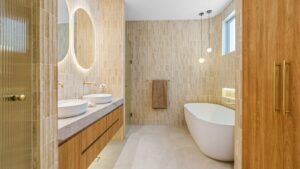
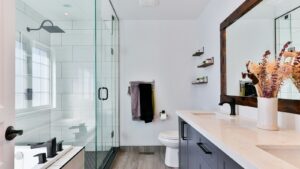
On bathroom vanities, focus first on splash management and sealed edges. Pick cherry for the desired visual warmth or maple for the selected light or painted finish, but wipe up water and repair coating damage rather than expecting species hardness to solve moisture exposure.
For broader construction choices, the guide to best materials for kitchen cabinets can help you compare the visible wood selection with the cabinet assembly.
Floors, stairs, and quieter spaces
| Location | Practical recommendation | Finish and maintenance check |
|---|---|---|
| Busy flooring and stair treads | Favor hard maple where impact resistance matters | Review coating requirements, entry grit control, and furniture protection |
| Living-area flooring | Cherry is reasonable when its appearance outweighs dent concerns | Accept visible character and understand the repair options |
| Bookshelves and bedroom built-ins | Choose primarily for the desired wood appearance | Use suitable panel construction and finish-safe cleaning |
| Accent walls | Prioritize color coordination rather than hardness | Approve samples in the room's actual lighting |
A hybrid scheme can work well: painted maple perimeter cabinets with a clear-finished cherry island, for example. Keep the contrast intentional through a shared door profile, hardware, or countertop.
Don't force maple stain to impersonate cherry solely to make everything match. Separate visual roles often produce a cleaner result than an almost-matching finish.
Cost, Availability, and Sourcing Realities
There's no reliable universal cherry premium to apply to your remodel. Without comparable supplier quotes, a claim that one species always costs more is more distracting than useful. Price the actual cabinetry, flooring, or millwork package you intend to install.
A board-foot comparison alone won't tell you what the completed project costs. The quote also needs to account for material selection, component dimensions, construction, finishing, delivery, and installation. A less expensive lumber option can stop being the less expensive finished option once the required work is included.
Compare equivalent specifications
Ask suppliers and cabinetmakers to quote the same scope:
- Species identity: Confirm American black cherry or hard maple rather than accepting a broad wood label.
- Appearance selection: Describe acceptable color variation and visible character.
- Construction: Separate solid components from veneered panels and identify the core.
- Finish scope: Include the approved color process, topcoat, and exposed-edge treatment.
- Delivery requirements: Confirm availability, material condition, and the replacement process for rejected pieces.
Ask about origin and moisture content as part of procurement, not after delivery. Don't assume that what's available on a retail shelf matches what a specialty supplier can furnish for a coordinated cabinet run.
Spend where the wood stays visible
For clear-finished cabinetry, I'd protect the budget for well-coordinated visible faces before upgrading hidden components for appearance alone. For painted cabinets, I'd prioritize sound construction and a proven paint system over paying for wood character nobody will see.
A lower appearance grade isn't automatically an equivalent substitute. Have the fabricator identify which characteristics are cosmetic, which are unsuitable for the proposed finish, and which affect the component's use.
Budget checkpoint: Request alternatives as complete installed packages. A cheaper species with a more demanding finish isn't necessarily a cheaper project.
Check availability before finalizing adjoining materials. If the selected stock can't be supplied within your construction schedule, changing the wood may also require new finish samples and another design approval. That coordination matters more than a supposed nationwide price ranking.
How to Decide for Your Specific Project
Make the decision with a surface schedule. List the cabinetry, floors, stairs, and built-ins being changed, then assign a species and construction to each. This keeps a preferred showroom sample from becoming an automatic specification everywhere.
Start with expected abuse, then decide on appearance, and finally compare the complete quotes. That order prevents budget discussions from hiding an unsuitable surface choice.
Match the specification to the household
A busy family kitchen usually warrants maple at exposed impact-prone components, with either species available for less vulnerable cabinet faces. If painted cabinetry is the goal, spend your review time on the approved finish sample and construction rather than debating natural wood color. Make furniture protection and cleaning instructions part of the handover.
A low-traffic primary suite gives cherry more room to be an aesthetic choice. Consider it for a bedroom built-in or coordinated furniture-style cabinetry when you want warmth and accept its aging behavior. The vanity still needs the bathroom-specific detailing discussed earlier.
A Craftsman-style whole-home renovation doesn't require one species throughout. Cherry can establish the visual direction through prominent millwork, while maple serves surfaces where the household's contact level makes it more appropriate. Bring those selections together with consistent profiles and carefully reviewed finish samples.
These are decision examples, not promises about how any particular installation will perform.
Check the repair path before ordering
For flooring, ask about the installed product's refinishing limitations and repair process. If you're deciding whether to keep existing wood rather than replace it, hardwood floor restoration on Long Island is a related resource to consider alongside a local assessment of your own floor.
Before approval, confirm:
- Daily care: Who will provide the written cleaning instructions?
- Damage repair: What happens if a door, tread, or floorboard needs attention?
- Sample control: Which approved sample will the installer use for acceptance?
- Scope clarity: Are the species, core, finish, and installation details written into the proposal?
Choose the option whose appearance, care requirements, and repair compromises you can live with. Neither species makes an incomplete specification safe.
Common Questions About Mixing, Painting, and Aging
Can cherry and maple share an open-concept space?
Yes. Assign them distinct roles, such as an island and perimeter cabinets, and review the combination beside the flooring. Intentional contrast is preferable to an unsuccessful near-match.
When should I choose painted maple?
Choose it when you want painted cabinetry rather than visible wood. Approve the paint system and substrate together; don't pay for cherry's appearance only to conceal it.
How do I match new cherry to existing wood?
Have the finisher compare samples against the existing installation. Discuss both the immediate match and expected aging instead of relying on a stain name.
Is either suitable outdoors?
Neither is a default choice for exposed decks or wet exterior assemblies. For an outdoor proposal, require a tested coating and suitable detailing, or select a material intended for that exposure.
NorCal Construction offers kitchen and bathroom remodeling, whole-home renovations, and coordinated design, material selection, and construction management across the East Bay. Visit NorCal Construction to discuss your cabinet, flooring, or built-in plans and develop a wood-and-finish specification that fits your household, budget, and project schedule.